The Gut-Brain Axis: Unlocking the Biological Connection Between Your Stomach and Mind
The gut-brain axis reveals that mental and physical health are inseparable. By caring for your microbiome through better sleep, diet, and stress management, you actively support your brain. Biology proves that listening to your "gut feelings" is more than just a metaphor—it is a medical necessity for a healthy life.
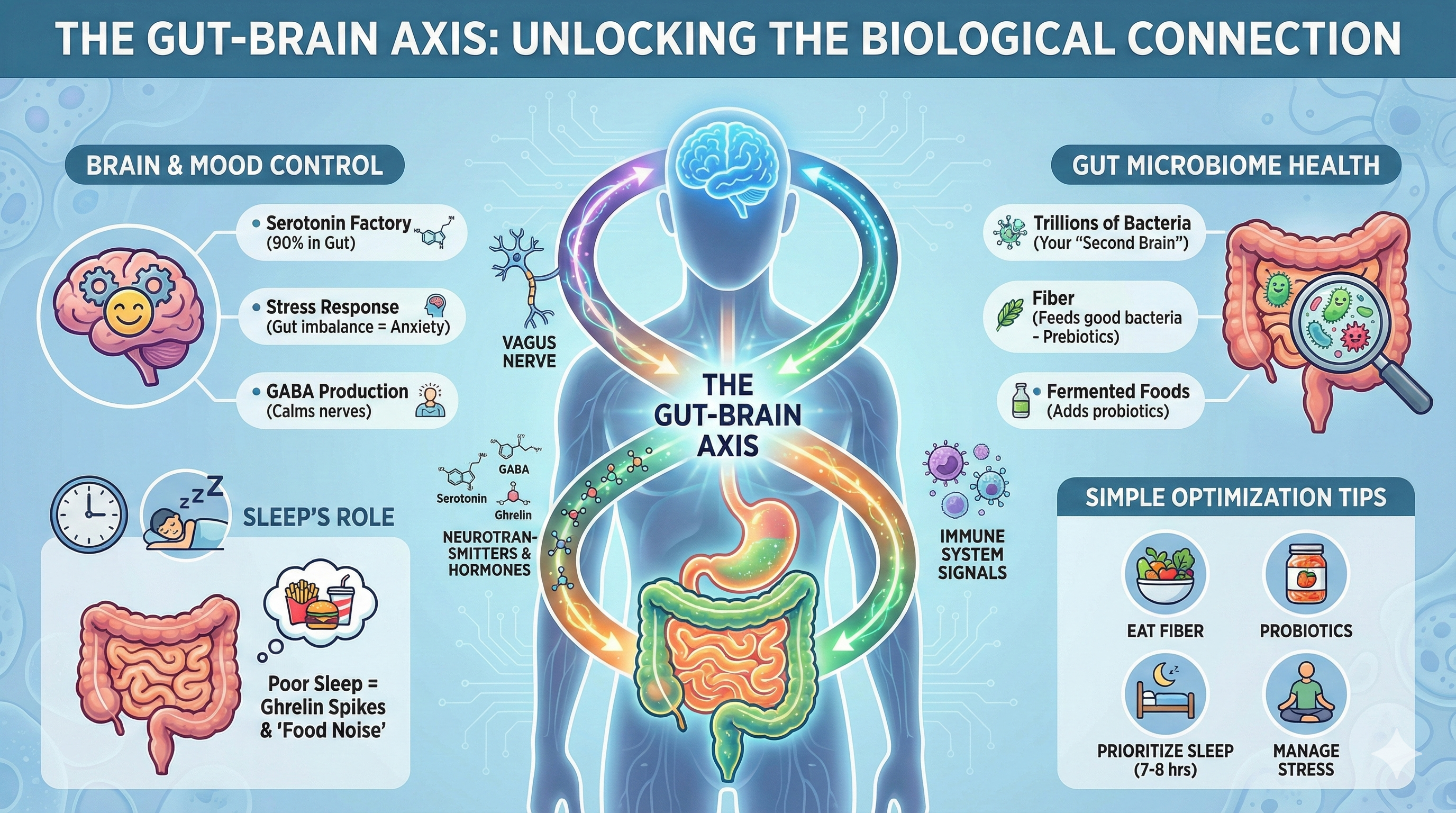
The Gut-Brain Axis: Unlocking the Biological Connection Between Your Stomach and Mind
Have you ever felt "butterflies" in your stomach when nervous? That sensation is real biology at work. It is the result of a direct communication line between your belly and your brain. Scientists call this the Gut-Brain Axis.
In recent years, biology has shifted focus from studying organs in isolation to understanding these complex connections. New research in 2024 and 2025 highlights how the bacteria living in your intestines (the microbiome) influence your mood, stress levels, and even your cravings.
What is the Gut-Brain Axis?
The gut-brain axis is a two-way communication network. It connects the enteric nervous system (the nerves in your gut) to the central nervous system (your brain and spinal cord).
The Vagus Nerve: This acts like a superhighway, sending rapid signals back and forth between the brain and the gut.
Chemical Messengers: Your gut bacteria produce chemicals that travel to the brain via the blood.
Immune System: The gut houses 70% of your immune cells, which can signal the brain if there is inflammation or illness.
How Bacteria Control Your Mood
It might sound strange, but your stomach acts like a "second brain." The trillions of bacteria living there produce neurotransmitters—the same chemicals your brain uses to regulate mood.
Serotonin Factory: Approximately 90% of the body's serotonin (the "happiness hormone") is produced in the gut, not the brain.
Stress Response: An unbalanced gut can send distress signals to the brain, increasing feelings of anxiety and depression.
GABA Production: Beneficial bacteria produce GABA, a chemical that helps calm the nervous system and reduce fear.
The "Food Noise" Phenomenon and Sleep
A major global health trend in 2025 is understanding "food noise"—the constant, intrusive thoughts about food. Biologists have found a link between poor sleep, gut health, and these cravings.
When you do not sleep enough, your biological rhythms are disrupted:
Ghrelin Spikes: Lack of sleep causes the "hunger hormone" ghrelin to rise.
Microbiome Shift: Sleep deprivation stresses gut bacteria, which can trigger cravings for high-sugar and high-fat foods.
Brain Fatigue: A tired brain struggles to resist these chemical signals, leading to overeating.
Simple Ways to Optimize Your Gut-Brain Health
You do not need expensive treatments to support this biological system. Simple lifestyle changes can strengthen the connection.
Prioritize Fiber: Eat diverse plants, fruits, and vegetables to "feed" good bacteria.
Fermented Foods: Yogurt, kimchi, and sauerkraut introduce healthy live bacteria (probiotics) to your system.
Protect Your Sleep: Aim for 7–8 hours of rest to keep hunger hormones balanced.
Manage Stress: Chronic stress slows down digestion and harms healthy bacteria. Practice deep breathing or meditation.
Supporting Content: Glossary of Key Terms
Microbiome: The community of trillions of bacteria, fungi, and viruses living in the human digestive tract.
Neurotransmitters: Chemical messengers (like serotonin and dopamine) that transmit signals between nerve cells.
Vagus Nerve: The main nerve of the parasympathetic nervous system, controlling digestion and heart rate.
Probiotics: Live beneficial bacteria found in certain foods and supplements.
Prebiotics: Types of dietary fiber that feed the friendly bacteria in your gut.
Frequently Asked Questions (FAQs)
Q1: Can changing my diet really improve my mental health?
Yes. Since the gut produces 90% of your serotonin, a diet rich in fiber and probiotics can support better mood regulation and lower anxiety levels.
Q2: What are the signs of an unhealthy gut?
Common signs include frequent bloating, gas, irregular sleep patterns, constant sugar cravings, and unexplained skin irritations.
Q3: How long does it take to improve gut health?
While individual results vary, studies show that changes in diet can alter the gut microbiome in as little as 24 to 48 hours, though lasting health benefits require consistent habits.
Q4: Is "food noise" a psychological or biological issue?
It is often biological. High levels of "food noise" are frequently linked to hormonal imbalances (like ghrelin) and poor gut-brain signaling, often caused by lack of sleep or poor nutrition.
Q5: Do probiotics work for everyone?
Probiotics can be very helpful, but they work best when combined with a healthy diet (prebiotics). It is always best to consult a doctor before starting high-dose supplements.
Q6: What is the most important nutrient for the gut-brain axis?
Fiber is arguably the most important. It is the primary fuel source for beneficial bacteria, allowing them to thrive and communicate effectively with the brain.