Atomic Structure and Cathode Ray Tubes
Test your understanding of the fundamental particles of an atom and the experiment that led to the discovery of the electron.
Pages: 5 Questions per page: 10
Rate this quiz
Avg: 0.00 ( 0 )
1. According to the text, who is credited with coining the term 'atom'?
2. What two conditions are required for the production of cathode rays in a discharge tube, as described in the text?
3. Why does no electric current flow through the discharge tube when the gas pressure is at 1 atm?
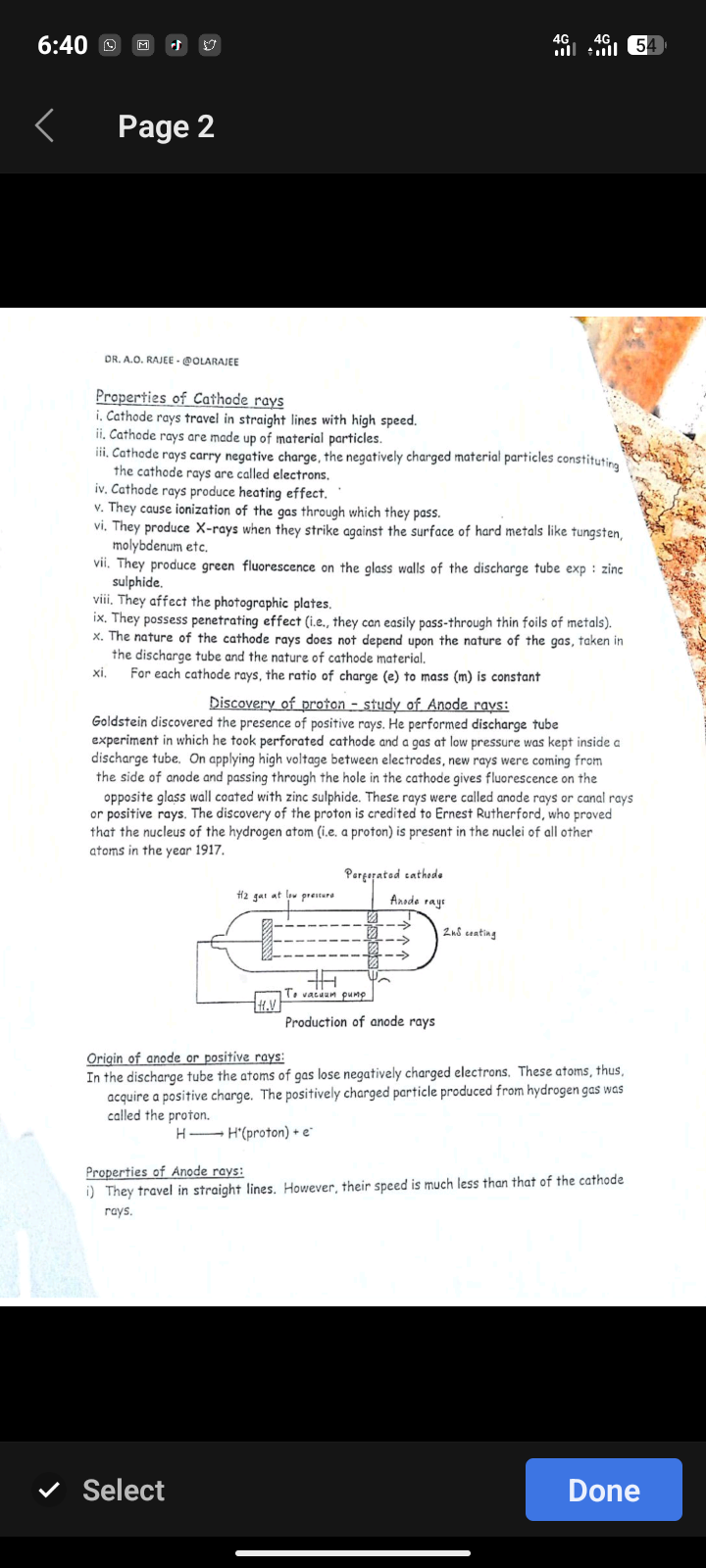
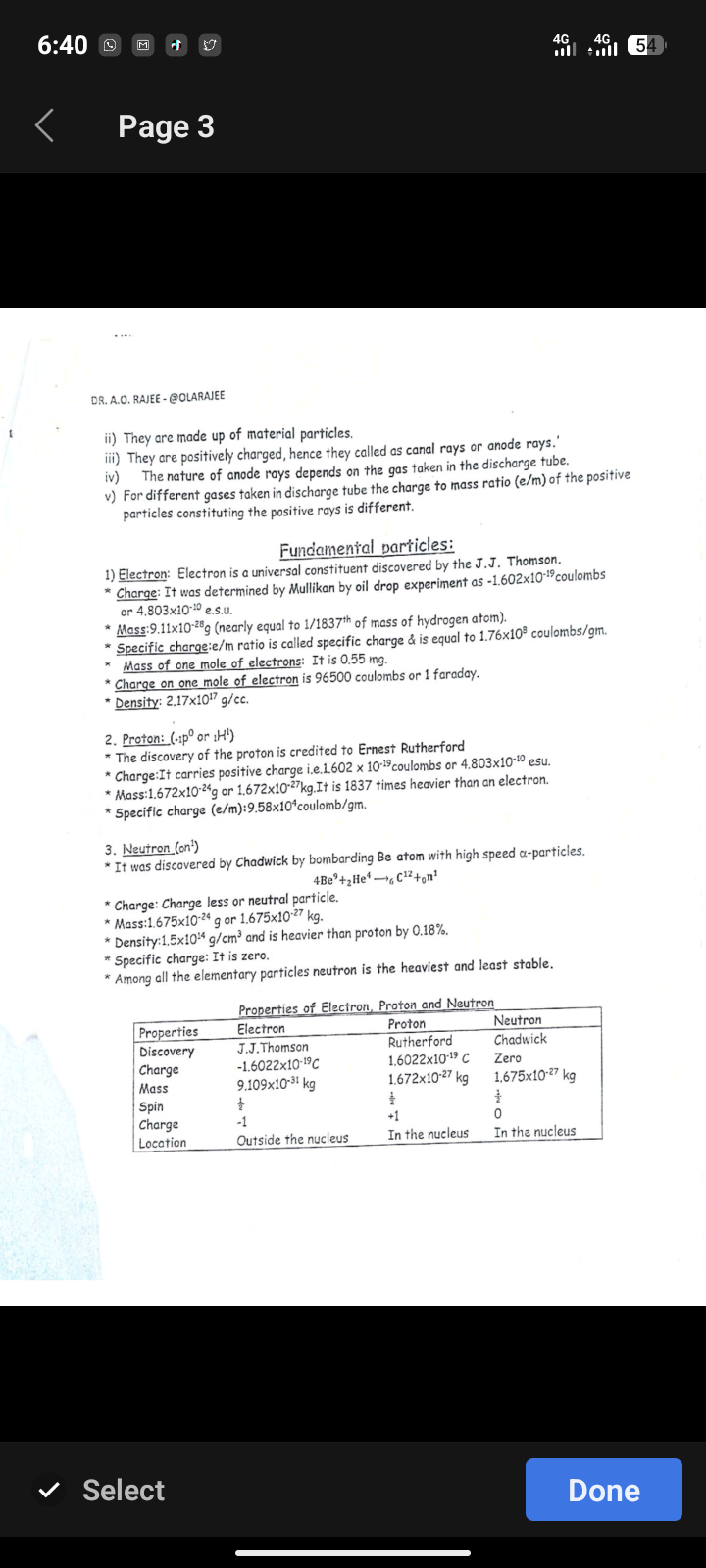
4. Based on the text, what is the fundamental composition of cathode rays?
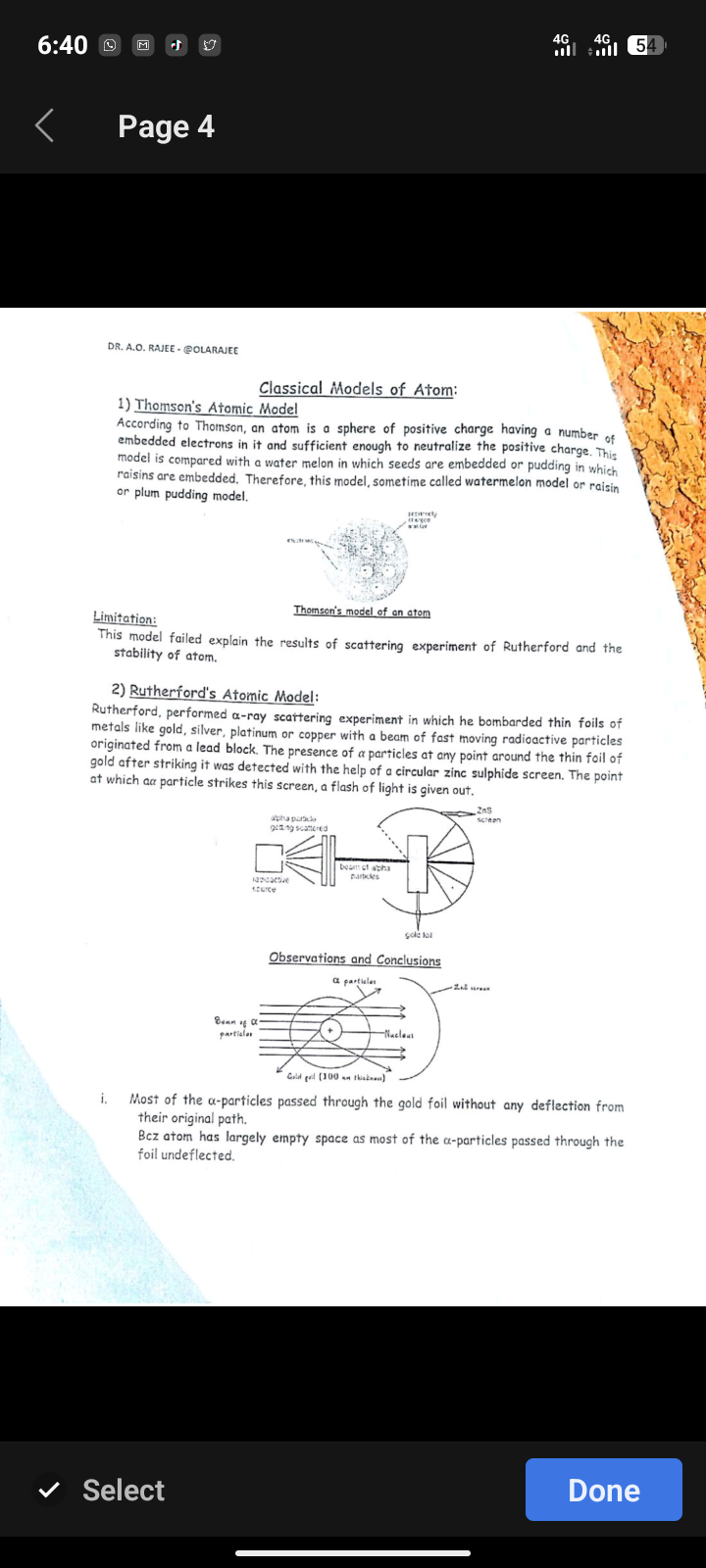
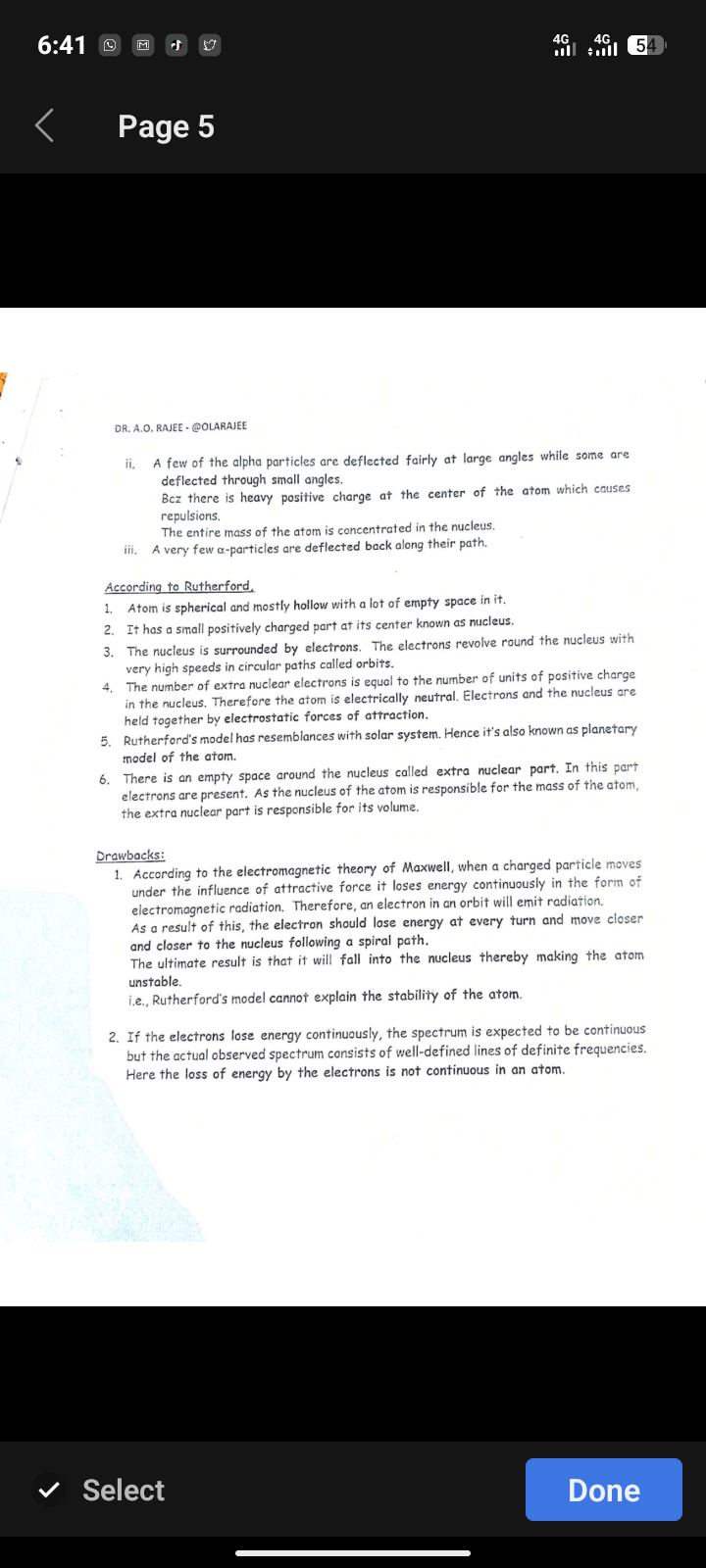
5. According to the document, why is an atom considered electrically neutral?
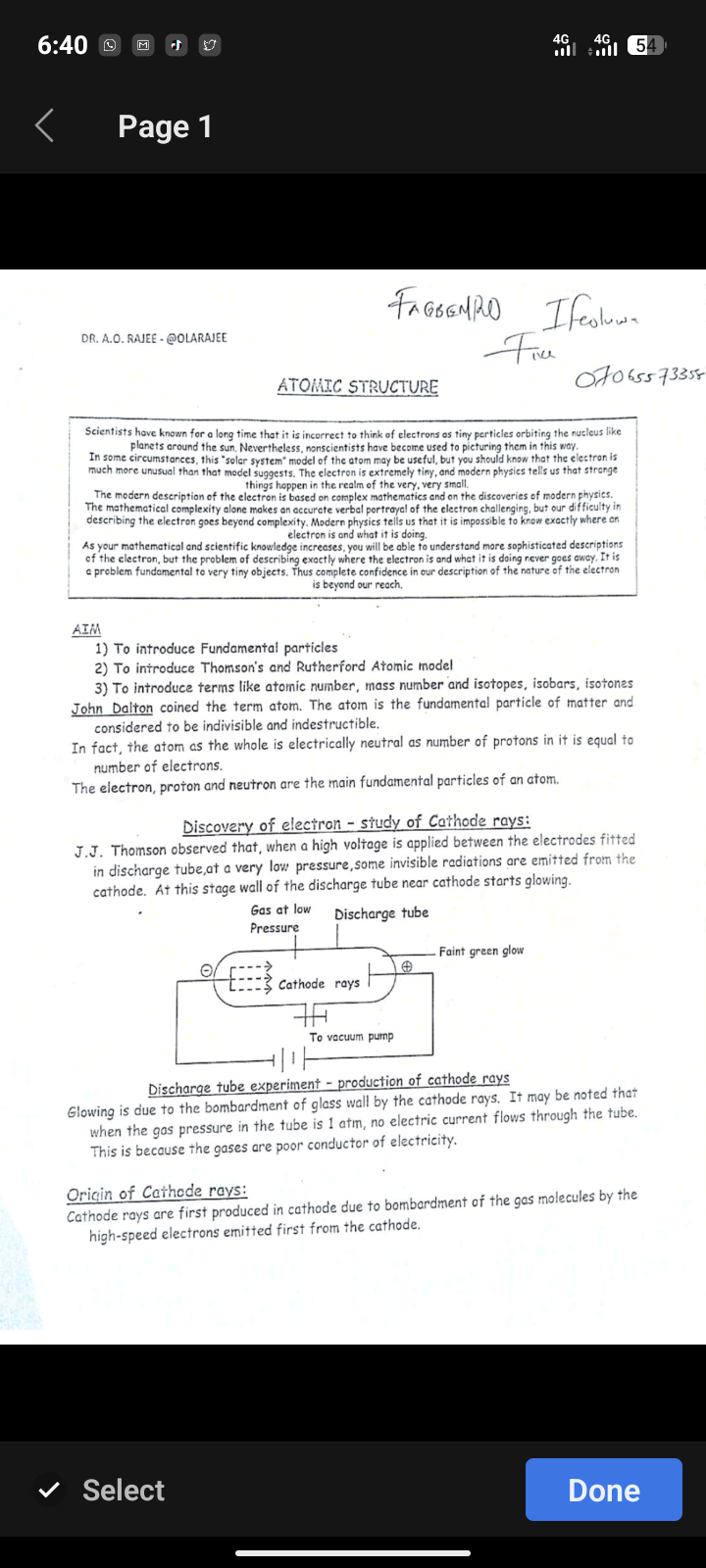
6. In the diagram of the discharge tube experiment, in which direction do the cathode rays travel?
7. What visible effect, shown in the diagram, indicates the presence of cathode rays?
8. Which scientist is named in the text for their observations of cathode rays?
9. According to the introductory paragraph, modern physics finds it difficult to create an accurate verbal portrayal of the electron because of its:
10. Which of the following is listed as one of the 'Aims' of the lesson?