How to Reduce Turnitin Similarity
A high Turnitin similarity score isn't always a sign of plagiarism, but it can indicate areas that need improvement. The best way to reduce your similarity percentage is to focus on original writing, effective paraphrasing, proper citations, and thoughtful use of sources. Instead of looking for shortcuts, take the time to understand the material and express ideas in your own words. By following ethical academic practices, you can not only lower your Turnitin score but also create stronger, more credible, and higher-quality work that reflects your true understanding of the subject.
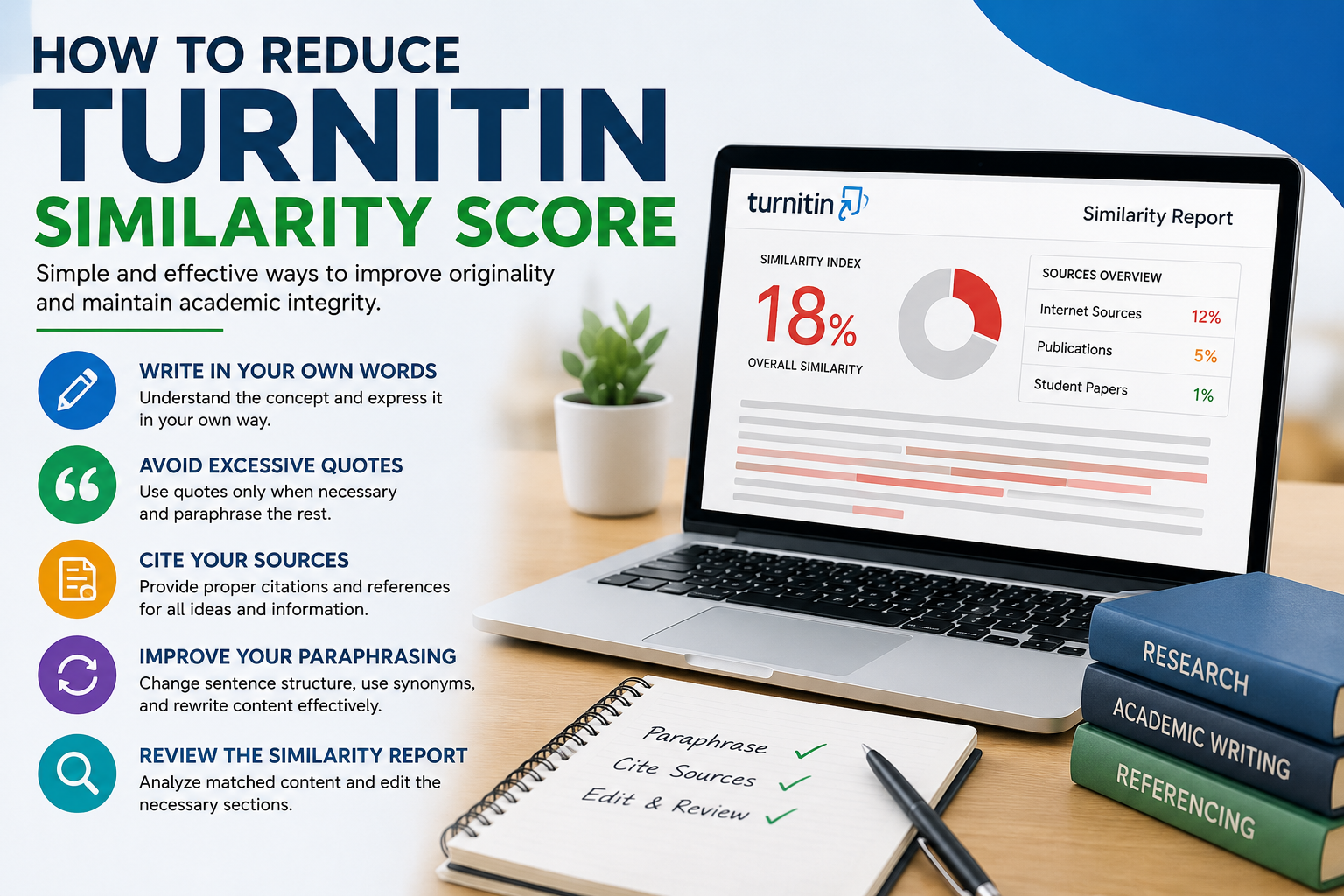
How to Reduce Turnitin Similarity Score Without Compromising Quality
If you've recently submitted an assignment and received a high Turnitin similarity score, you're probably wondering what went wrong. Don't worry—you're not alone. Many students face this issue, especially when working on research papers, dissertations, or academic assignments that require extensive referencing.
The good news is that a high similarity score doesn't always mean plagiarism. In many cases, it simply means that parts of your content match existing sources. The key is knowing how to make your work more original while maintaining academic integrity.
In this article, we'll look at practical ways to reduce your Turnitin similarity score and improve the originality of your writing.
Understand Why Your Similarity Score Is High
Before making any changes, take a close look at the Turnitin report. The report highlights sections that match content already available online, in journals, books, or previously submitted papers.
Some common reasons for a high similarity score include:
Using too many direct quotes
Weak paraphrasing
Missing citations
Copying definitions or technical explanations
Reusing content from previous assignments
Once you know what's causing the matches, it's much easier to fix them.
Rewrite Instead of Replacing Words
One mistake many students make is changing a few words and thinking that's enough. Turnitin is smart enough to detect simple word substitutions.
Instead, read the source carefully, understand the idea, and then explain it in your own way. Changing the sentence structure and presenting the information from a different angle can significantly improve originality.
For example, instead of copying a sentence and replacing a few words, try rewriting the entire idea as if you're explaining it to a friend.
Use Proper Citations
Citations play a huge role in academic writing. Whenever you use someone else's ideas, research, or findings, make sure you credit the source.
Whether you're using APA, MLA, Harvard, or Chicago style, accurate citations show that you're using sources responsibly. While citations may still appear in the similarity report, they help instructors distinguish between plagiarism and legitimate referencing.
Avoid Overusing Direct Quotes
Quotes are useful, but using too many can increase your similarity percentage.
Ask yourself whether the exact wording is necessary. If not, paraphrase the information and cite the source instead. This not only helps lower similarity but also demonstrates your understanding of the topic.
Improve Your Paraphrasing Skills
Good paraphrasing isn't just about changing words. It involves:
Changing sentence structure
Combining or splitting ideas
Using different examples
Writing in your own academic style
The better your paraphrasing skills, the more original your work will become.
Check Repeated Content
Sometimes similarity comes from repeating the same phrases throughout your document. Reading your paper carefully can help you spot unnecessary repetition.
Try using alternative sentence structures and more natural transitions to keep your writing fresh and engaging.
Review the Similarity Report Carefully
Not every highlighted section needs to be changed. References, common phrases, and properly cited quotations often appear as matches.
Focus on the areas with large blocks of matching text. These sections usually have the biggest impact on your overall similarity score.
Don't Use Shortcuts
You may come across tools that claim to instantly reduce Turnitin similarity scores. Be cautious.
Methods like article spinning, hidden text, or automated synonym replacement often create awkward content and can violate academic guidelines. In many cases, they make the situation worse rather than better.
The safest approach is always to improve the content yourself.
Focus on Original Writing
At the end of the day, the best way to reduce a Turnitin similarity score is to create original content from the start.
Research thoroughly, understand the topic, take your own notes, and write in your own voice. Not only will this help lower similarity percentages, but it will also improve the overall quality of your work.
Final Thoughts
Reducing a Turnitin similarity score isn't about finding tricks or shortcuts. It's about creating authentic, well-written content that reflects your understanding of the subject.
By improving your paraphrasing, using citations correctly, limiting unnecessary quotes, and carefully reviewing your similarity report, you can produce stronger academic work and maintain academic integrity.
Remember, originality is not just about getting a lower percentage—it's about demonstrating your knowledge and critical thinking skills.