Best Way to Reduce Turnitin Similarity (Ethically): A Complete Student Guide
Turnitin similarity scores can be stressful for students, especially when universities enforce strict plagiarism and academic integrity policies. Many students ask the same question before submission:
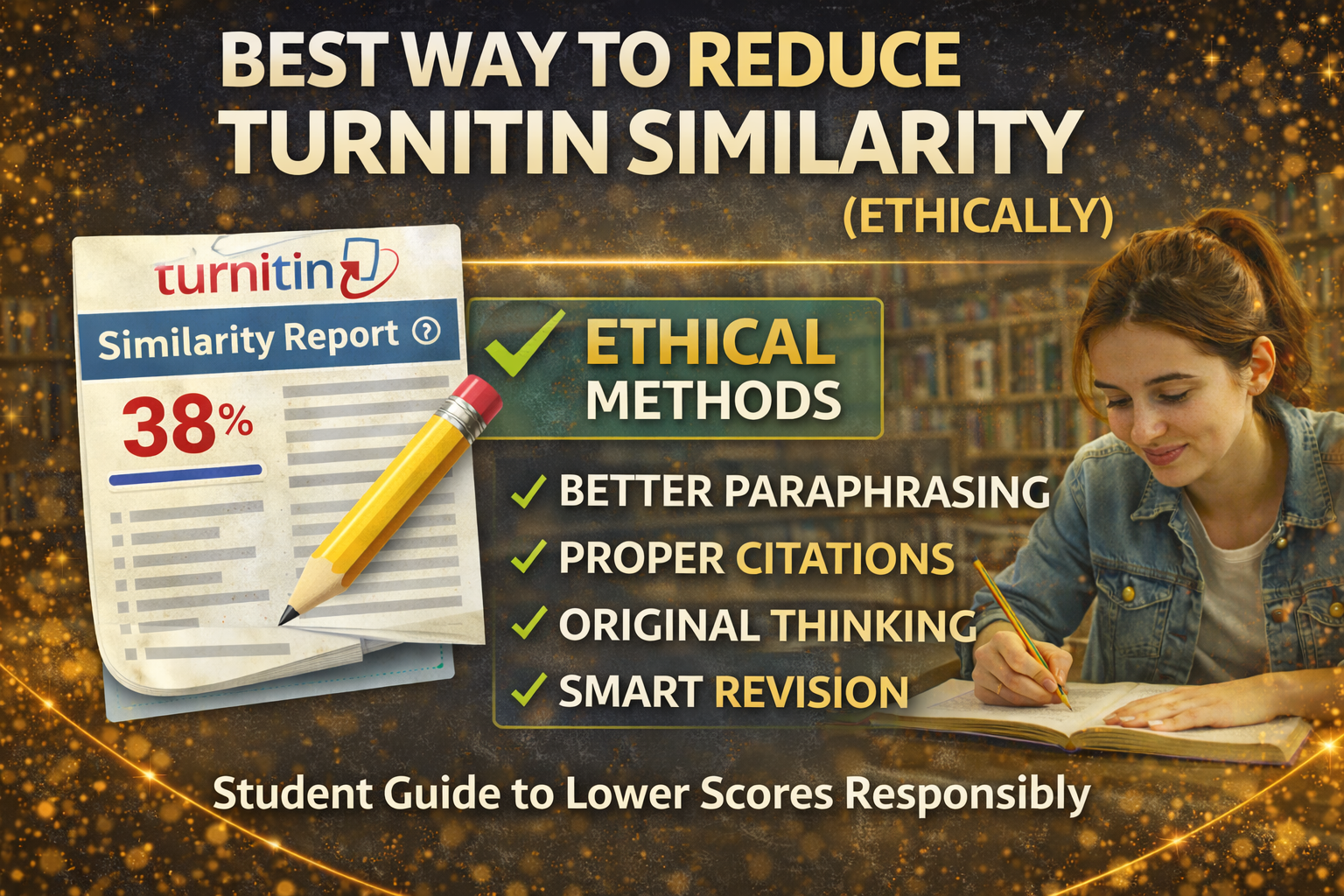
“What is the best way to reduce Turnitin similarity ethically?”
The good news is that reducing similarity does not mean cheating or manipulating content. When done correctly, it is a normal and responsible part of academic writing.
This guide explains ethical, university-approved methods to lower Turnitin similarity while maintaining originality and academic quality.
What Does Turnitin Similarity Actually Mean?
Turnitin similarity shows how much of your content matches:
Published academic sources
Online content
Student paper repositories
A similarity score is not plagiarism by itself. It simply highlights matched text. Universities review:
How content is used
Whether citations are correct
Whether ideas are genuinely your own
What Is an Acceptable Turnitin Similarity Percentage?
There is no universal rule, but commonly:
0%–10% → Excellent
10%–20% → Generally acceptable
20%–30% → Needs improvement
Above 30% → High risk (depends on institution)
Always check your university’s specific guidelines.
Best Ethical Ways to Reduce Turnitin Similarity
1️⃣ Improve Paraphrasing (Not Just Word Replacement)
Poor paraphrasing is the biggest reason for high similarity.
Ethical paraphrasing means:
Understanding the original idea
Rewriting it in your own academic voice
Changing sentence structure, not just synonyms
Keeping the original meaning intact
Avoid copy-paste with minor word changes—Turnitin easily detects this.
2️⃣ Use Proper Citations Everywhere Needed
Uncited sources increase similarity risk.
Always:
Cite books, journals, websites, and reports
Use the required style (APA, MLA, Harvard, Chicago)
Add in-text citations and a reference list
Correct citations often reduce similarity flags significantly.
3️⃣ Avoid Overusing Direct Quotations
Excessive quotations increase similarity even when cited correctly.
Best practice:
Use quotes sparingly
Prefer paraphrased explanations
Quote only definitions or critical statements
Many universities prefer original interpretation over quotations.
4️⃣ Add Original Analysis and Critical Thinking
Turnitin similarity drops when your work includes:
Personal analysis
Case-specific discussion
Critical evaluation
Examples linked to the assignment question
Original thinking is something Turnitin cannot match.
5️⃣ Rewrite Highlighted Sections After a Similarity Check
Checking similarity before final submission allows you to:
Identify matched sections
Rewrite or paraphrase them
Improve citations
This is one of the most effective and ethical methods.
👉 Verified Turnitin self-check option:
https://isolatedstudy.in/verified_apps?section=apps&search=turnitin
6️⃣ Avoid Submitting Drafts to Official University Portals
Submitting drafts to official portals can:
Store your paper in the repository
Cause self-plagiarism later
Always revise offline or use safe self-checking before final submission.
7️⃣ Use AI Tools Responsibly (With Human Editing)
AI-assisted drafting is common—but raw AI content can trigger:
High AI detection
Repetitive phrasing
Best practice:
Use AI only for brainstorming
Rewrite content manually
Add personal analysis and references
Human revision is essential.
What NOT to Do (Unethical & Risky Methods)
❌ Using plagiarism bypass tools
❌ Spinning content aggressively
❌ Copying from other student papers
❌ Hiding text or using symbols
❌ Paying for fake “Turnitin cleaning”
These methods can lead to academic misconduct penalties.
Why Checking Turnitin Before Submission Matters
Pre-checking helps you:
Fix accidental plagiarism
Improve citations
Reduce AI flags
Submit confidently
It’s a responsible academic habit, not misconduct.
Final Advice for Students
Reducing Turnitin similarity ethically is about:
Better writing
Proper citations
Original thinking
Smart revision
There are no shortcuts, but the right approach protects your grades and academic reputation.
👉 Check your similarity safely before submission:
https://isolatedstudy.in/verified_apps?section=apps&search=turnitin
❓ Frequently Asked Questions (FAQ)
❓ What is the best ethical way to reduce Turnitin similarity?
Improving paraphrasing, adding original analysis, and using proper citations are the most effective ethical methods.
❓ Can paraphrasing reduce Turnitin similarity?
Yes, proper paraphrasing significantly reduces similarity when done correctly.
❓ Does citing sources reduce similarity?
Yes. Correct citations help Turnitin and instructors recognise legitimate use of sources.
❓ Is it okay to check Turnitin before final submission?
Yes. Self-checking before submission is a responsible academic practice.
❓ Can AI-written content increase similarity?
AI content can trigger AI detection and repetitive phrasing. Human editing is essential.
❓ How much similarity is acceptable?
Usually below 20%, but always follow your university’s policy.
❓ Can Turnitin detect poor paraphrasing?
Yes. Simple word replacement is easily detected.
❓ Is reducing similarity cheating?
No—when done ethically, it improves originality and academic quality.