Future-Proofing Your Education Career: AI Integration, Global Mobility, and Skill-Based Hiring Trends for 2026
The education landscape is shifting from traditional degrees to skill-based adaptability. To succeed in 2026, professionals must embrace AI fluency, prioritize emotional intelligence, and remain globally mobile. Continuous upskilling is no longer optional—it is the only way to stay relevant in a tech-driven world.
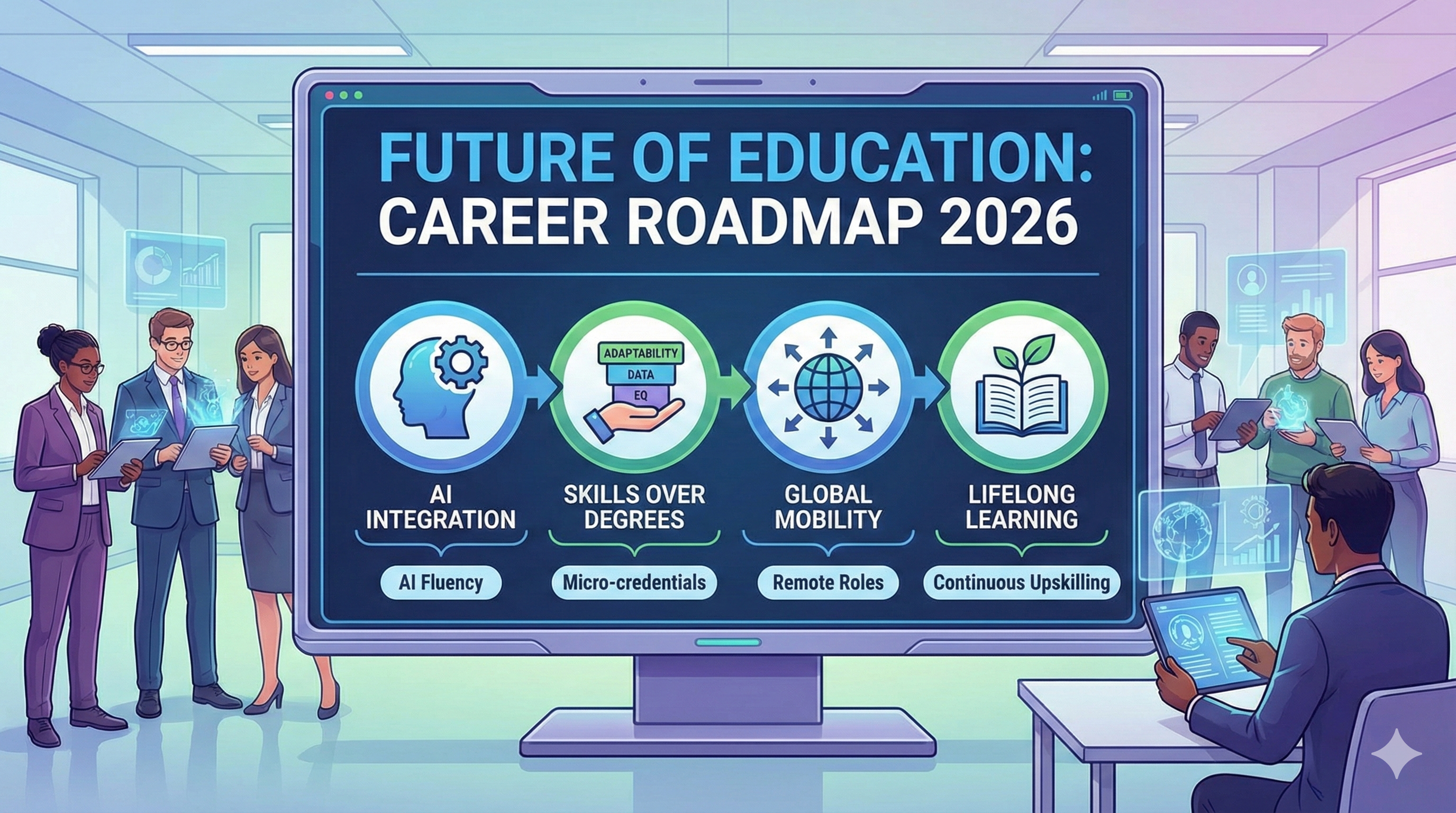
The Future of Education Careers: Surviving the AI Shift
The professional field of education is undergoing a massive transformation. It is no longer just about classroom management or lesson planning. In late 2025 and moving into 2026, the sector is defined by Artificial Intelligence (AI), global mobility, and a shift from "degrees" to "skills."
If you want to build a sustainable career in education, you must adapt to these global trends. Here is how the landscape is changing and what you need to do to stay ahead.
The AI Revolution: From Tool to Teammate
AI is not replacing teachers, but it is replacing tasks. The most successful educators today are those who use AI to automate administrative work and personalize learning.
AI Fluency: Employers now expect you to know how to prompt AI models effectively.
Agentic AI: New software can handle grading and scheduling autonomously.
Human-in-the-Loop: Your value lies in interpreting AI data and adding the human touch that machines cannot replicate.
Skills Over Degrees: The New Hiring Norm
Global hiring trends show a decline in the value of traditional 5-year career plans. Instead, schools and EdTech companies are looking for "micro-credentials" and specific competencies.
Lifelong Learning: Short courses in data analysis or digital marketing are often more valuable than a generic master's degree.
Portfolio Power: Showcasing a portfolio of digital content or curriculum design is becoming more important than your university GPA.
Data Interpretation: You must be able to read student data dashboards and adjust your teaching strategies accordingly.
Global Mobility and Emerging Roles
The definition of where an educator works is expanding. With visa policies fluctuating in major education hubs like the US and UK, many professionals are looking at alternative markets or remote roles.
Remote & Hybrid Teaching: Schools are hiring "Self-Enrichment Teachers" who teach specialized skills online to global audiences.
EdTech Consultants: There is a high demand for professionals who can bridge the gap between software engineers and classroom realities.
Ambivert Advantage: Roles now require a mix of extroverted teaching and introverted data analysis, making "ambiverts" highly sought after.
Essential Soft Skills for 2026
Technical skills get you hired, but soft skills keep you employed. As AI takes over logic tasks, your emotional capabilities become your superpower.
Emotional Intelligence (EQ): The ability to manage student anxiety and navigate diverse cultural classrooms.
Adaptability: Being comfortable with curriculum changes that happen mid-semester.
Collaboration: Working effectively with remote teams and AI agents simultaneously.
FAQs: Careers in Education
Q1: Will AI replace teachers in the future?
No, AI will not replace teachers. However, it will automate routine tasks like grading and lesson planning. Teachers who learn to work with AI will replace those who do not.
Q2: What is the most in-demand skill for educators in 2026?
"Adaptability" and "AI Fluency" are the top skills. You must be able to use new tools quickly and adjust to changing learning environments.
Q3: Is a Master's degree still necessary for a career in education?
For administration roles, yes. But for EdTech and modern teaching roles, practical skills, certifications, and a strong portfolio are often valued more than traditional degrees.
Q4: What are "micro-credentials"?
These are short, focused certifications (like a Google Data Analytics Certificate) that prove you have a specific skill. They are faster and cheaper than a degree.
Q5: Can I work internationally as an educator without moving?
Yes. The rise of online learning platforms allows you to teach students in other countries remotely. This is a growing trend known as "virtual mobility."
Supporting Content Ideas
To help you share this topic with your audience, here are three content ideas you can generate:
Checklist: "The 2026 Educator’s Survival Kit" (List of apps, AI tools, and soft skills).
Social Media Poll: "Would you trust an AI to grade your students' essays? Yes/No."
Short Video Script: "3 Signs You Are Future-Proofing Your Teaching Career."