Comprehensive Sex Education: Empowering Youth for a Healthy Future
CSE is essential for building a respectful, healthy, and informed society. By empowering youth with accurate knowledge and life skills, we reduce health risks and foster a global culture of dignity, safety, and equality for everyone.
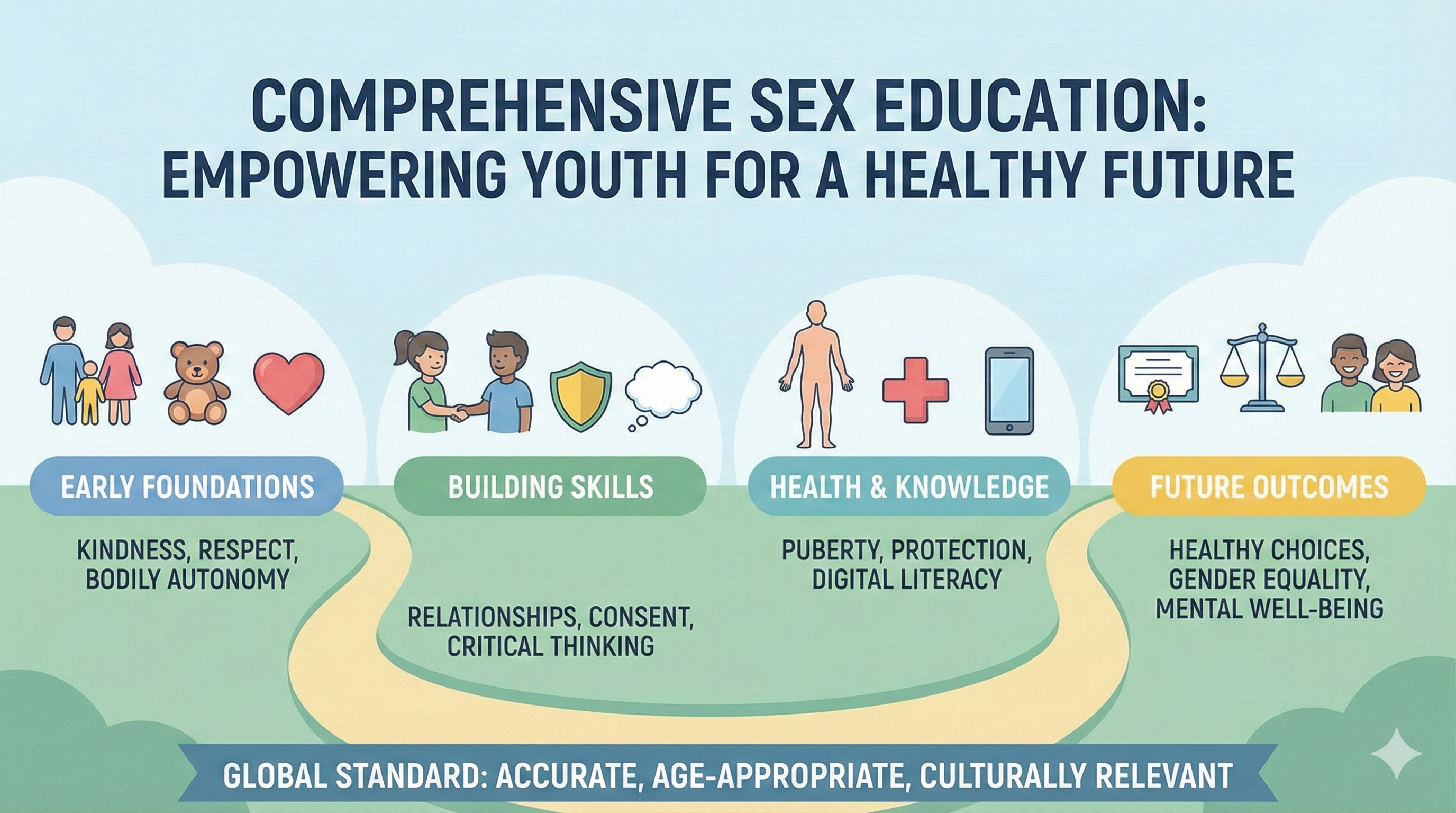
The Global Standard: Why Comprehensive Sex Education Matters
Comprehensive Sex Education (CSE) is more than just learning about biology. It is a curriculum-based process that explores the cognitive, emotional, physical, and social aspects of sexuality.
In a rapidly changing digital world, CSE provides young people with the essential tools to navigate relationships, health, and their own identities safely.
What is Comprehensive Sex Education?
CSE is a teaching method that is age-appropriate and culturally relevant. It does not happen all at once; it is a journey that often starts at age 5 with simple concepts like kindness and family, and evolves as the child grows.
According to global standards set by UNESCO and the WHO, CSE aims to:
Equip youth with accurate knowledge.
Develop skills for decision-making.
Foster respectful attitudes and values.
Promote human rights and gender equality.
Core Topics Covered in CSE Curricula
A high-quality CSE program covers a wide range of essential life skills, including:
Relationships: Understanding family dynamics, friendship, and healthy partnerships.
Values: Exploring respect, tolerance, and empathy.
Safety: Consent, bodily autonomy, and protection from abuse.
Health: Puberty, reproduction, contraception, and STI/HIV prevention.
Human Rights: Gender equality and understanding diversity.
Key Benefits of CSE for Youth
Research consistently shows that accurate education leads to better health outcomes.
Delays Sexual Activity: Contrary to myths, CSE helps youth delay their sexual debut.
Reduces Risky Behavior: Students are more likely to use protection and practice safer sex.
Prevents Violence: Teaching consent and respect reduces rates of gender-based violence.
Improves Mental Health: Understanding bodily changes reduces anxiety and shame during puberty.
Global Trends: CSE in the Digital Age
Today, young people often turn to the internet for information. This makes school-based CSE more critical than ever. Modern CSE programs now include:
Digital Literacy: How to stay safe online and avoid cyberbullying.
Media Analysis: Understanding how social media shapes body image and relationship expectations.
Critical Thinking: How to distinguish between medical facts and online myths.
Frequently Asked Questions (FAQs)
1. Does sex education encourage students to have sex early?
No. Extensive global research shows that CSE actually delays the age of sexual initiation. Knowledge empowers youth to make responsible, cautious decisions rather than acting on impulse or peer pressure.
2. Is CSE appropriate for young children?
Yes. For younger children, the curriculum focuses on non-sexual topics such as family, friendship, managing emotions, and understanding that their body belongs to them (bodily autonomy).
3. Doesn't this undermine the role of parents?
Not at all. CSE is designed to complement the guidance parents provide at home. It encourages students to talk to their parents and trusted adults about these important topics.
4. Is CSE only about preventing pregnancy?
No. While it covers reproductive health, it also focuses heavily on building healthy relationships, preventing abuse, understanding consent, and promoting mental well-being.
5. Why is "gender" a part of sex education?
Understanding gender helps students recognize harmful stereotypes. This promotes equality and helps prevent gender-based violence and discrimination in schools and society.
Supporting Content Ideas
Social Media Captions (Instagram/LinkedIn/X):
"Education is protection. 🛡️ Comprehensive Sex Education (CSE) isn't just about biology—it's about consent, respect, and healthy relationships. Let's empower the next generation. #CSE #Education #GlobalHealth"
"Did you know? Research shows that quality sex education actually delays sexual activity in youth. Knowledge is power. 💡 #Facts #YouthEmpowerment"
"From understanding consent to navigating online safety, CSE covers the life skills every young person needs in 2025. 🌍📚 #FutureReady #HealthEducation"
Newsletter Blurb:
"Subject: Why We Need to Talk About CSE
In a digital world full of misinformation, schools play a vital role in keeping youth safe. This week on the blog, we break down what Comprehensive Sex Education really includes (hint: it starts with kindness and respect) and debunk the biggest myths surrounding it. Read more to see how we can build a safer future."