Learn about the software applications used to access and view web pages. Test your knowledge of common web browsers.
Pages: 4Questions per page: 4
Rate this quiz
☆☆☆☆☆
Avg: 0.00 ( 0 )
Score: 0Page 1 / 4
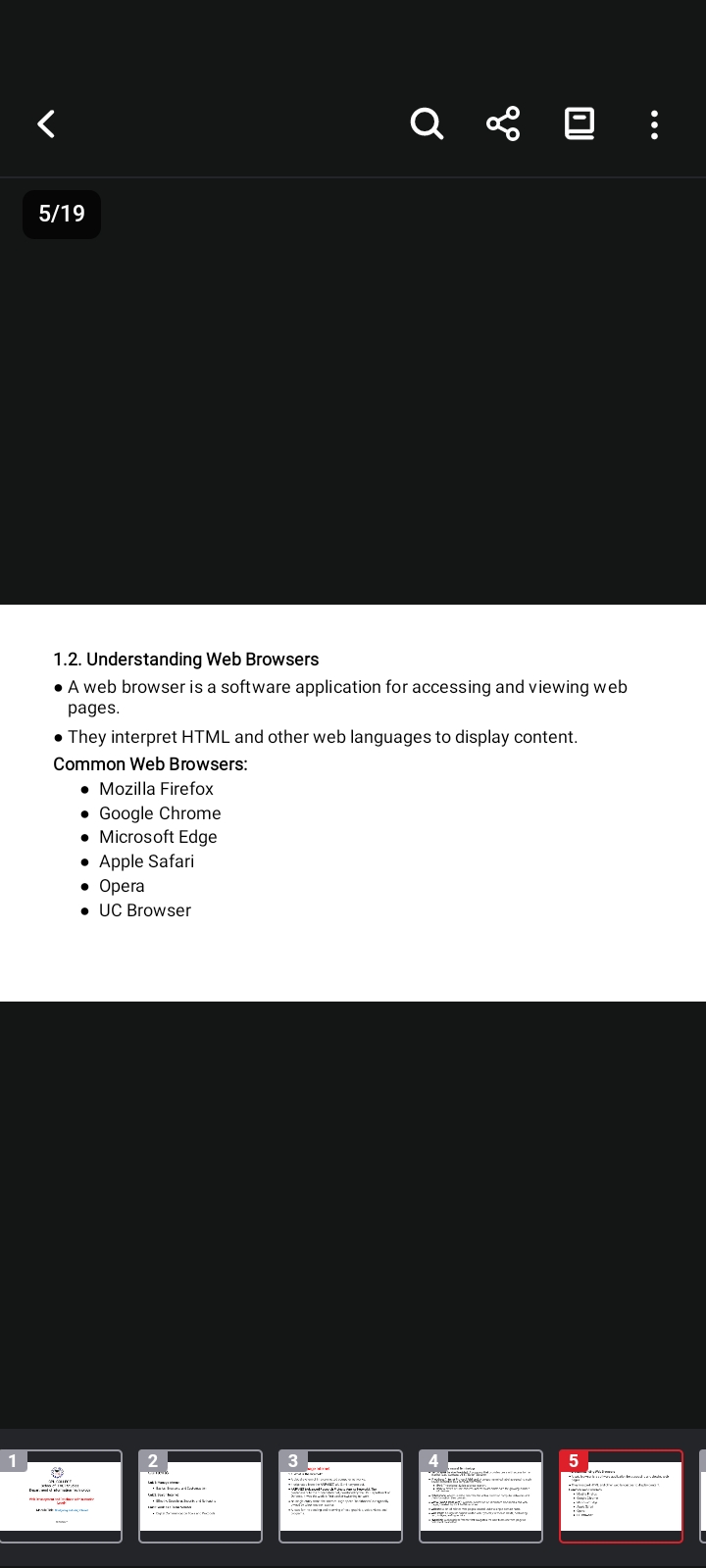
1. According to the image, what is the primary function of a web browser?
Explanation: The first bullet point explicitly states that 'A web browser is a software application for accessing and viewing web pages.'
2. What kind of languages do web browsers interpret in order to display content?
Explanation: The slide mentions, 'They interpret HTML and other web languages to display content.'
3. Which of the following is NOT mentioned in the list of 'Common Web Browsers'?
Explanation: The list of common web browsers provided includes Mozilla Firefox, Google Chrome, Microsoft Edge, Apple Safari, Opera, and UC Browser. 'Brave' is not on this list.
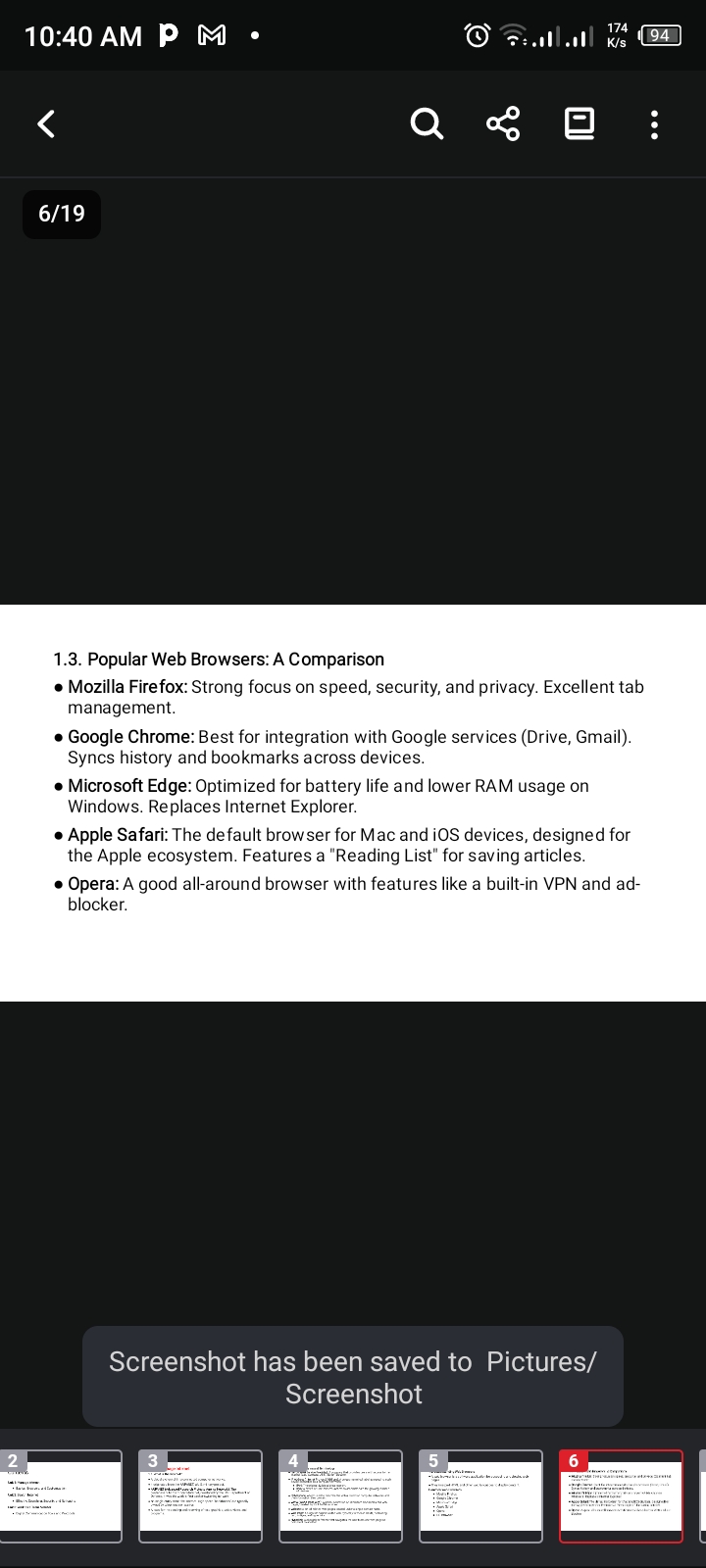
4. According to the provided text, which web browser is particularly noted for its strong focus on speed, security, and privacy?
Explanation: The text states that Mozilla Firefox has a 'Strong focus on speed, security, and privacy.'
5. Which browser is described as being 'Best for integration with Google services (Drive, Gmail)'?
Explanation: The description for Google Chrome explicitly mentions its strength in integrating with Google services.
6. Based on the comparison, which browser offers built-in features like a VPN and an ad-blocker?
Explanation: The text describes Opera as a browser 'with features like a built-in VPN and ad-blocker.'
7. The document states that Microsoft Edge replaced which older browser?
Explanation: The description for Microsoft Edge clearly states that it 'Replaces Internet Explorer.'
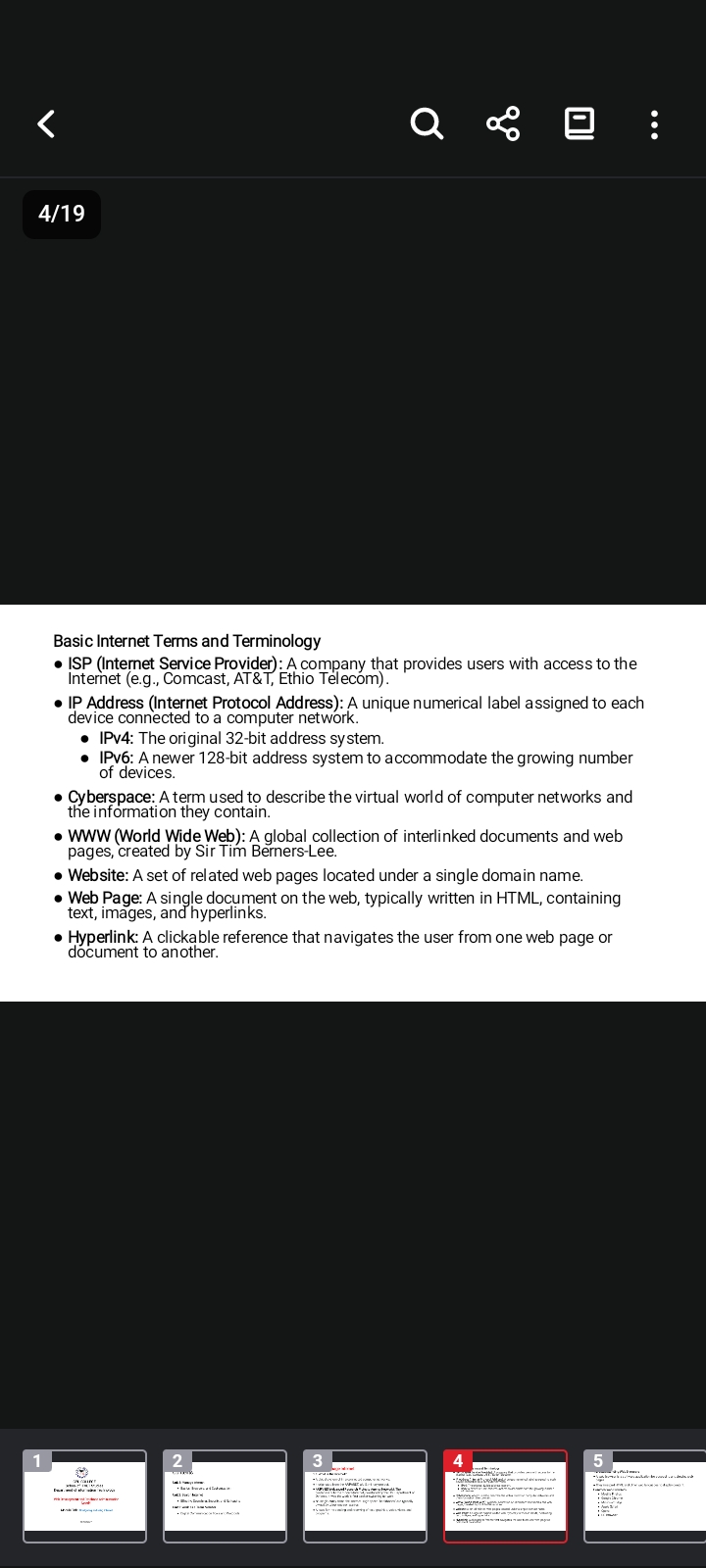
No questions generated for this image.
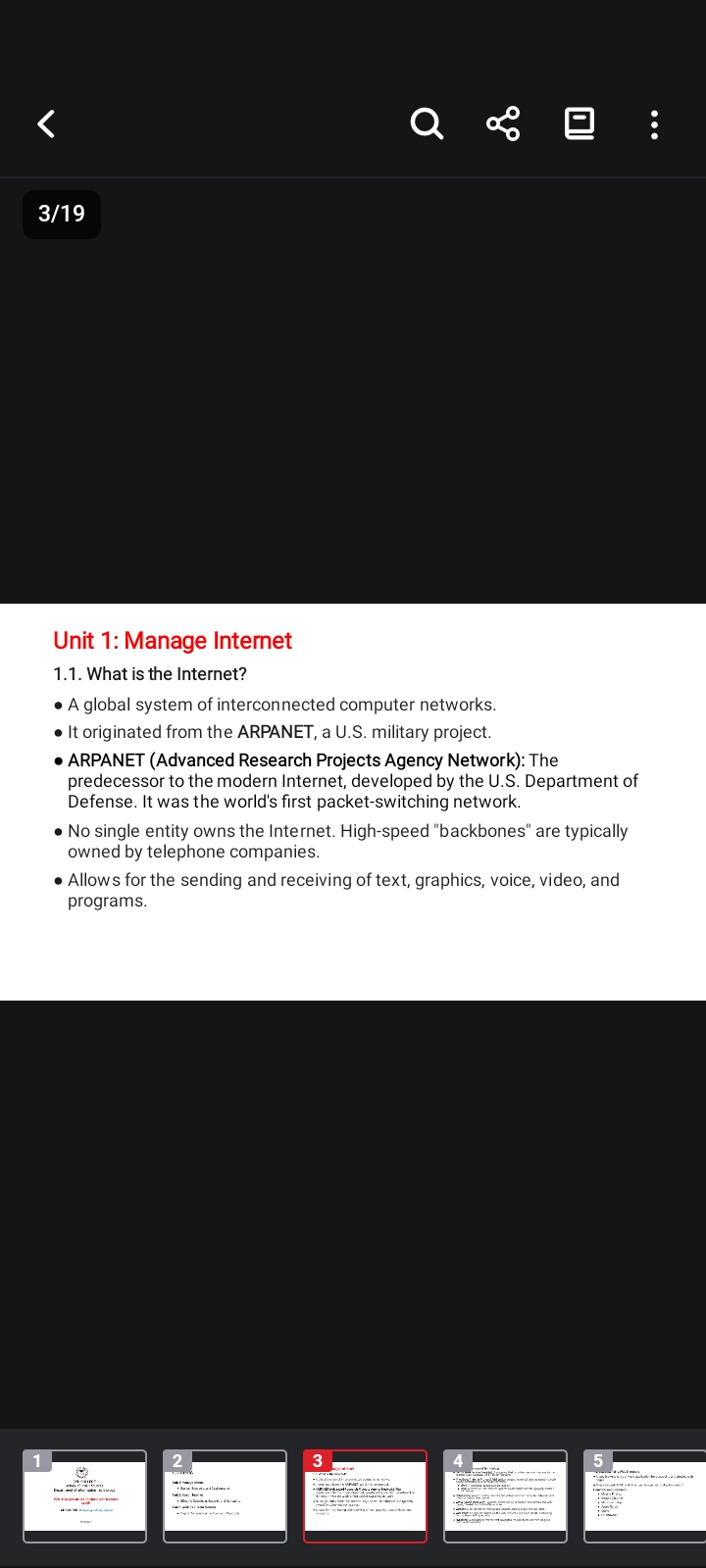
8. What was the predecessor to the modern Internet, according to the provided text?
Explanation: The slide explicitly states that the Internet originated from ARPANET and that ARPANET was the predecessor to the modern Internet, developed by the U.S. Department of Defense.
9. According to the slide, who owns the Internet?
Explanation: The text clearly states, "No single entity owns the Internet." While it mentions telephone companies own the high-speed "backbones," they do not own the entire internet.
10. ARPANET is described as the world's first what?
Explanation: The text about ARPANET specifies that "It was the world's first packet-switching network."
11. Which of the following best defines the Internet based on the first point in the slide?
Explanation: The very first bullet point defines the Internet as "A global system of interconnected computer networks."