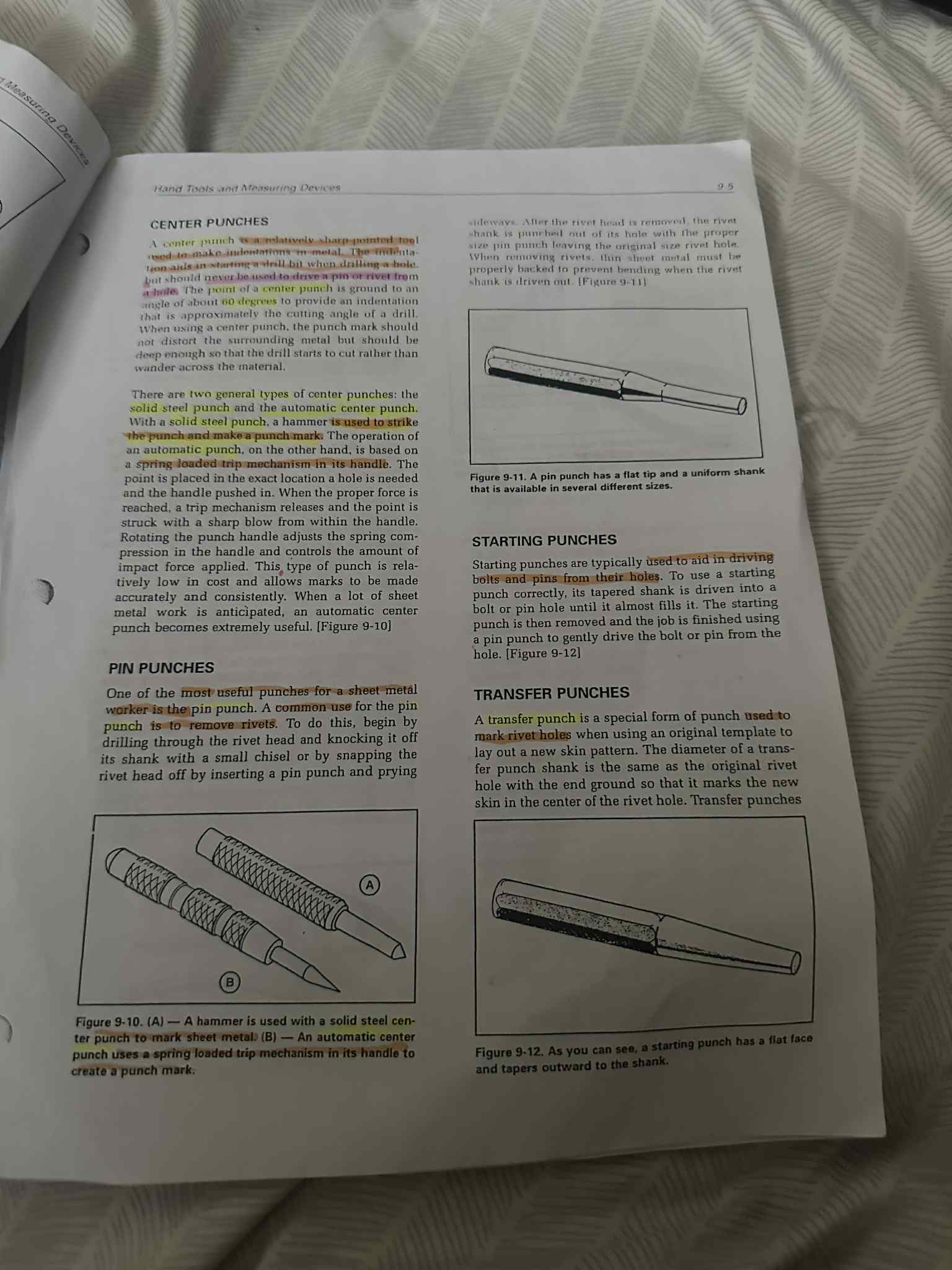
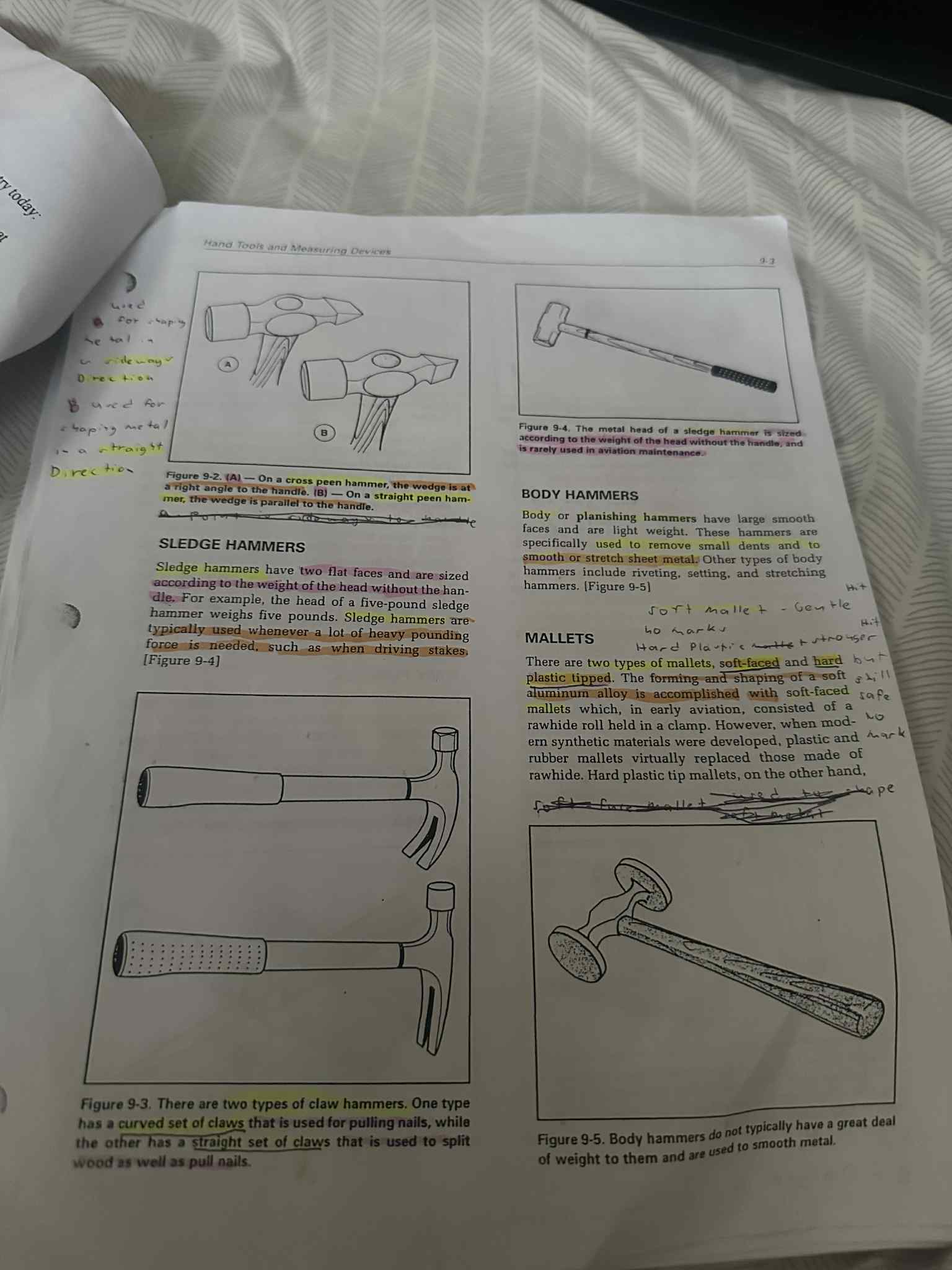
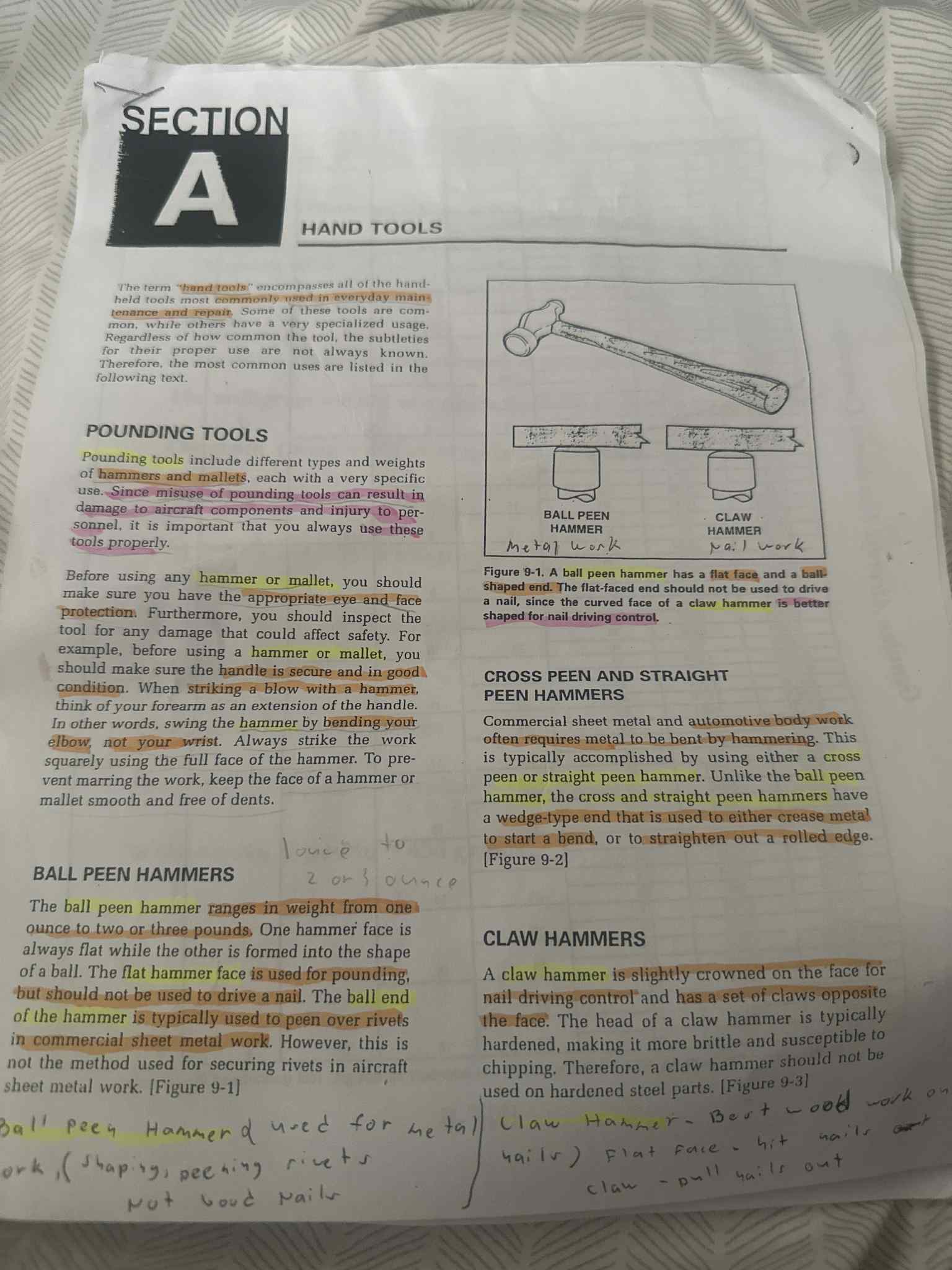
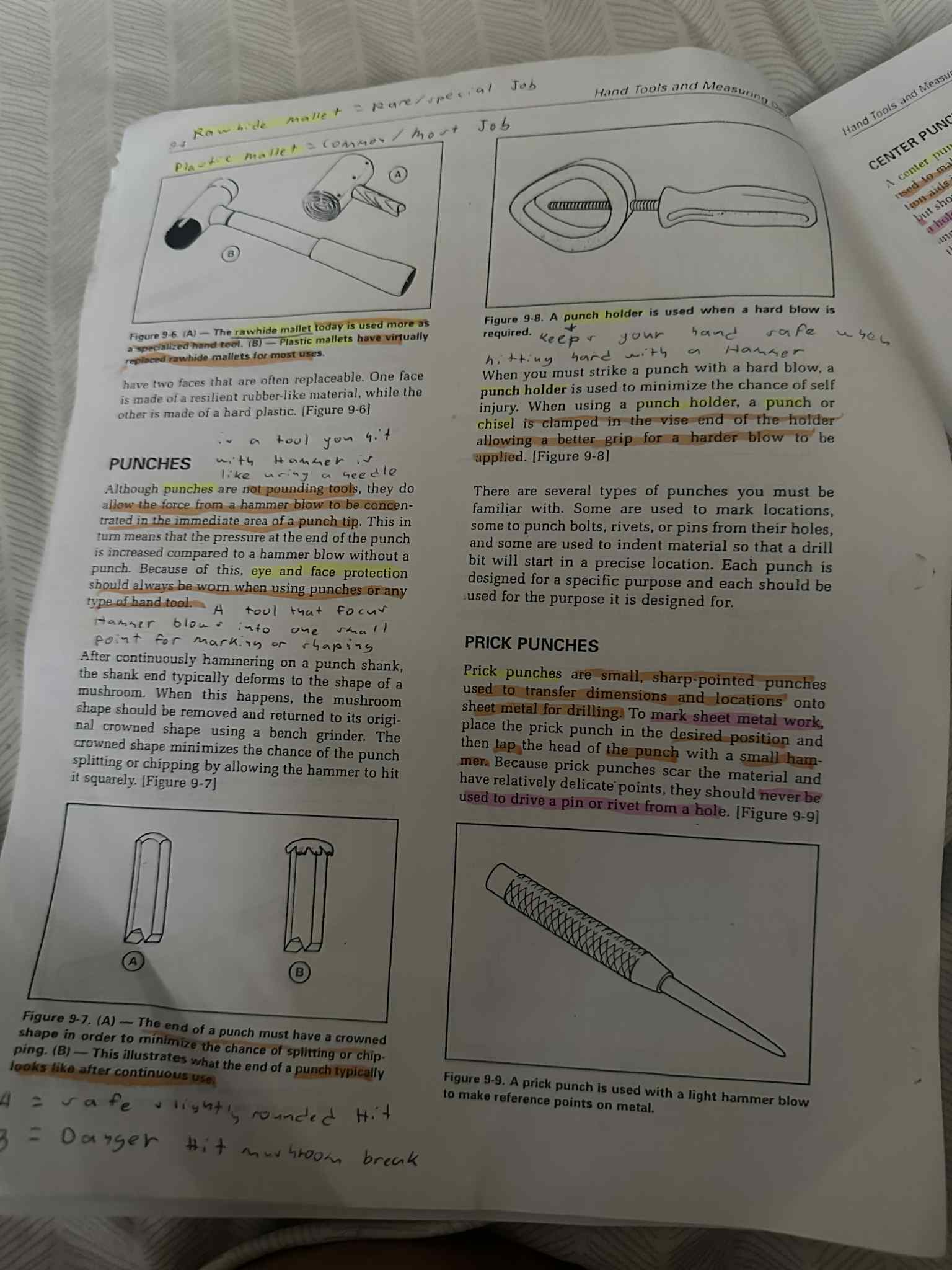
This quiz covers various types of hand tool punches. Test your ability to identify different punches and understand their specific applications in metalworking.
Pages: 4Questions per page: 1
Rate this quiz
☆☆☆☆☆
Avg: 0.00 ( 0 )
Score: 0Page 1 / 4
1. Based on Figure 9-10 and the accompanying text, what is the key difference in operation between the two types of center punches shown?
Explanation: The text describes two types of center punches. Under the section 'CENTER PUNCHES' and in the caption for Figure 9-10, it states that the solid steel punch (A) is used with a hammer, while the automatic center punch (B) 'uses a spring loaded trip mechanism in its handle to create a punch mark.'
2. According to the text, what should be done when the shank end of a punch deforms into a 'mushroom' shape from continuous use?
Explanation: The text explicitly states: 'When this happens, the mushroom shape should be removed and returned to its original crowned shape using a bench grinder.' Figure 9-7 illustrates the dangerous mushroomed end (B) and the safe, recrowned end (A).
3. According to the text provided in the image, what is the primary use for a straight claw hammer that distinguishes it from a curved claw hammer?
Explanation: The text below Figure 9-3 states that a claw hammer with a 'curved set of claws that is used for pulling nails, while the other has a straight set of claws that is used to split wood as well as pull nails.' This indicates that splitting wood is a key function of the straight claw type.
4. According to the provided text, what is the typical use for the ball end of a ball peen hammer?
Explanation: The text under the 'BALL PEEN HAMMERS' section explicitly states: 'The ball end of the hammer is typically used to peen over rivets in commercial sheet metal work.' It also warns that a ball peen hammer 'should not be used to drive a nail'.